


REAL PAST LIFE STORY
Could Past Life Regression Reveal a Link Between His Blindness and Fear of Debt?
By Hitesh Chhabra • Past Life Regression Expert & Psychologist
Approx. 18 min read • September 2026
The Fear He Could Never Explain
He had earned a place as a senior officer in the Indian government by clearing a highly competitive examination. It was an achievement that spoke of years of study, discipline and determination. But his journey had taken a painful turn while he was still a schoolboy: he lost his eyesight in the eighth grade.
Until then, he had been able to see. He was going through school and discovering the world around him when an infection developed in one eye. His sight began to fade, and then the problem spread to the other eye. Eventually, he could no longer see from either one. The faces, places and everyday sights he had known since childhood were no longer available to him in the same way.
At first, the loss shattered him. He was still so young, with much of his life ahead of him, and the way he had always experienced the world had changed. There was no immediate achievement or spiritual understanding that could make that loss feel small. He had to live through it before he could begin to imagine what his life might become.
In time, another thought began to take shape within him. If he could no longer rely on his physical eyes, could he develop a different way of seeing? While still young, he turned toward yoga, meditation and spiritual practice. He worked on awakening what he called his teesra netra, or third eye. As that inner awareness grew, he felt more able to understand his own emotions, sense what was happening around him and meet life with renewed confidence. This was how he described his spiritual experience; it did not erase the reality of losing his sight.
With that inner strength, he continued his education. He became a government officer, wrote poetry and practised judo. He travelled to more than seventeen countries, encountering places and cultures far beyond the world in which he had grown up. His physical sight had been taken from him, but his desire to learn, explore and contribute had remained alive.
And yet, beneath that confidence, one fear had never left him. Since childhood, the thought of owing anyone anything had troubled him deeply. It could be money, or it could be a favour he had not returned. What others might regard as a small obligation could stay in his mind as an unsettled account. He feared that if it remained unpaid, something terrible might happen. Above all, he wanted to leave this world with nothing owed to anyone.
How could a man who had faced the loss of his sight, built a distinguished career and travelled the world still feel so powerless before the thought of an unpaid debt? He could not point to an event in his childhood that explained it. That was the question he brought to Hitesh Chhabra for a Past Life Regression session. He had come to understand a fear that even his many achievements had not quieted.
A Girl Waiting in a Ploughed Field

In the first past-life scene, he perceived a wide field, freshly ploughed and waiting to be sown. A girl of about sixteen to eighteen stood alone in it, wearing a long village dress and anklets. She came from a poor family, and the land beneath her feet was not theirs.
Far across the field, its owner was walking toward her. He appeared unaware that she was watching him. There had been no quarrel between them. He had never harmed her, and she felt no anger toward him. Yet she did not leave. She remained where she was, waiting for him to come closer.
As the scene became clearer, so did what she held in her hands: a loaded dunali, a double-barrel shotgun. She was there to shoot the man. She did not want to do it, but felt compelled to carry out the task. The closer he came, the harder that conflict became. One part of her urged her to stop. Another insisted that she could not turn back.
She made a decision that held both intentions at once. She would fire, but she would stay far enough away that the pellets from the LG round would spread before reaching him. She hoped the distance might spare his life. Holding the gun toward his upper body, she pulled the trigger.
The shot struck him. He cried out and fell to the ground. For a moment, she could see what she had done, without knowing whether he would survive it. Another round remained in the gun; she could have gone closer and fired again. Instead, she turned away and ran.
The Debt Behind the Shot
The girl ran back through the village and went straight to the moneylender, the sahukar. She threw the gun down before him. She had done what he demanded. The debt her father owed him, she insisted, was now settled.
Only then did the reason for her presence in the field become clear. Her father owed the moneylender a large sum, and the debt had brought constant distress to their poor family. With no brothers to take on the burden, she had offered to do whatever she could to free her father. The moneylender had a dispute with the owner of the field. He promised to clear the family’s debt if she shot the man, while keeping his own name out of the crime.
She had gone to the field hoping to save her father. Now the moneylender considered his account closed, but she could not put the sound of that shot or the sight of the man falling behind her. She did not know what had happened to him after she ran. When news of the shooting spread through the village, she went to his home, presenting herself as a concerned neighbour. No one there suspected that she was the person who had fired the gun.
Then she saw him. Pellets had struck near his left eye, and the injury had become infected. She was standing in the home of a man who was suffering because of her action. She wanted to tell him the truth, but could not find the courage. She could only remain beside him and watch as the damage grew worse.
In the life she experienced, effective treatment for his injured eye was not available. Over the following weeks, the infection spread, and the sight in his other eye began to fail as well. Eventually, he could no longer see from either one. She had fired from a distance because she did not want to take his life. She had never imagined that he would live with the consequences of that shot every day.
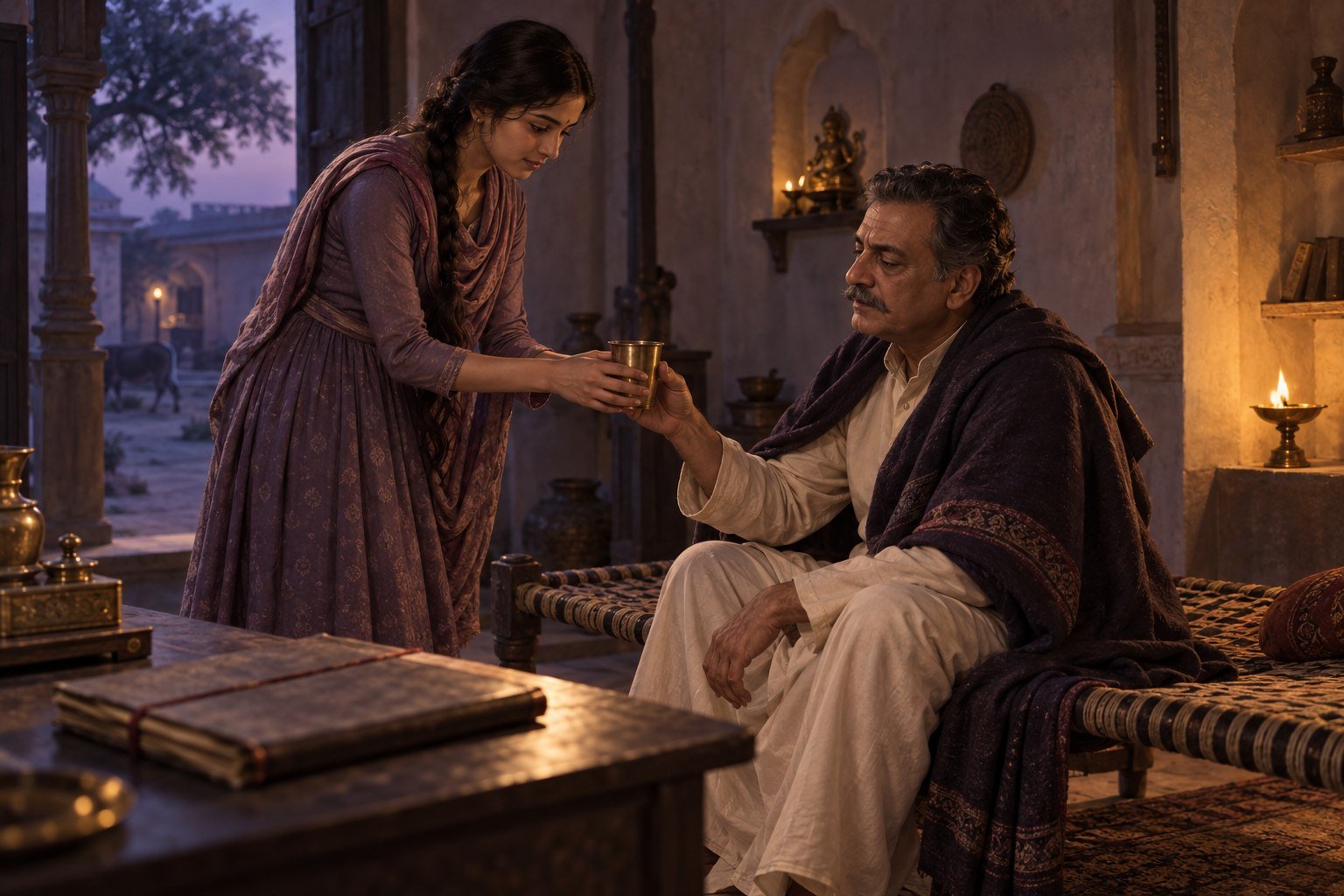
She could not give him back his sight. She could not bring herself to confess. But she could stay and care for him, and that became the way she tried to answer for what she had done. She continued looking after him until his death, carrying her secret and her remorse throughout those years.
Yet the tragedy had begun before she ever fired the gun. Her father’s debt had placed the family at the mercy of the moneylender. He had used their desperation to demand that she harm an innocent man, making it appear to her that this was the way to free her father. Without that debt, she would never have been waiting in the field with a weapon in her hands. That was the fear rooted in this life: an unpaid debt could give someone else power over her choices and draw her into an act she would regret for the rest of her life.
When the First Past Life Began to Make Sense
The scenes from the girl’s life came to an end, but the client remained in trance. From the exploration plane the space within the session where he could speak about what he had experienced he began to connect that life with his own.
First, there was the loss of sight. He recalled that an infection had developed in one of his eyes when he was in the eighth grade. His vision faded, and then the problem spread to his other eye. The sequence felt strikingly familiar: in the life he had just experienced, the man injured by the girl had also lost sight first in one eye and then the other. He recognized a resemblance between the two experiences.
Then his thoughts returned to the debt. The girl had not hated the landowner or wished to harm him. Her father’s unpaid obligation had left the family vulnerable to a moneylender who used their desperation to make her shoot an innocent man. For the client, this was the part that reached into his present life. He understood why owing someone even a small amount or an unreturned favour could feel so frightening. It was the fear of what another person might demand while an account remained unsettled.
He also spoke about how that fear had grown stronger after he became a government officer. In his position, a decision or a signature could affect many people. An obligation to someone, however small it appeared at first, might one day come with an expectation that he return the favour through his work. He did not want to find himself under that pressure, or to make a decision that compromised his integrity and harmed others. Staying clear of personal debts had become, for him, a way of protecting the independence of his judgment.
One more recognition emerged as he reflected on the scene. He felt that the landowner the girl had shot was a soul he knew in his present life: a close friend now living in Noida. The recognition belonged to what he experienced during the regression. With these connections still unfolding, he remained in trance as the session moved toward another life.
He Stopped Firing Because They Ran Out Of Bullets
The client remained in trance as another life began to unfold. This time he perceived himself as a man of about forty, living in a village near Delhi in 1919. He owned roughly 150 bighas of land and ran a prosperous dairy business. He had a wife and two daughters. His home, his work and the people who depended on him were at the centre of the life he knew.
That April, his daughters had gone to Amritsar to stay with his brother’s family. It was the season of Baisakhi, a time when families travelled, met relatives and gathered for the festival. While visiting their uncle, the girls went with him, their aunt and their cousins to Jallianwala Bagh. Their father remained near Delhi, expecting them to return home after the visit.
On 13 April, thousands of people gathered at Jallianwala Bagh. In the life the client was experiencing, his two daughters were there with their uncle, aunt and cousins. Some people had come for Baisakhi; others were there to express their opposition to British colonial policies and the arrests of Indian leaders. The crowd was peaceful and unarmed.
Then British troops arrived under the command of General Reginald Dyer. The Bagh was enclosed by walls, with narrow passages that made escape difficult. Dyer had brought armoured cars mounted with machine guns, but they could not pass through the approach to the garden. His soldiers took position at the entrance. No warning was given to the crowd to disperse. Dyer ordered his men to fire.
People who had gathered without weapons tried desperately to escape the gunfire. Some fell where they stood. Others rushed toward the narrow passages; some jumped into the well, hoping to escape the bullets. The troops kept firing into the unarmed crowd. The shooting stopped only when they ran out of ammunition. The number of people killed has remained contested, but no count can contain the loss suffered by families who waited for loved ones who never came home.
Jallianwala Bagh remains a wound in India’s memory. Michael O’Dwyer, then Lieutenant Governor of Punjab, supported Dyer’s actions. Years later, in 1940, Shaheed Udham Singh shot O’Dwyer in London. But for the man whose life the client was experiencing, the history of that day was also an intimate loss: in his account, both his daughters, his brother, his sister-in-law and the children who had accompanied them were killed.
He had not been at Jallianwala Bagh. He could not know each moment of what his daughters had endured. He knew only that they had gone to visit their family and would never return. The loss reached through his home, taking away not only his children but the brother’s family who had welcomed them.
His grief turned toward a question he could not put aside: what could he do in response? He still had a household and people who depended on him, so he could not leave everything behind and take up arms. Nor could he continue his prosperous life as though the massacre had happened to someone else. He resolved to support India’s struggle for freedom in a way his circumstances allowed.
He Kept the Fire of Revolution Alive

After losing his daughters and his brother’s family at Jallianwala Bagh, the landowner could no longer look at his prosperous life in the same way. He still had a wife, a household and people who depended on him. He could not abandon them to take up arms. But he made a private resolve: the land he owned, the income he earned and the food his dairies produced would help those fighting for India’s independence.
The struggle was unequal in ways that went beyond the battlefield. The British colonial administration had police, weapons, money and informers. Revolutionaries had to move carefully, conceal where they were staying and find people willing to help them despite the danger. A place to sleep or enough food for the next day could matter as much as money. The landowner understood that he could offer all three.
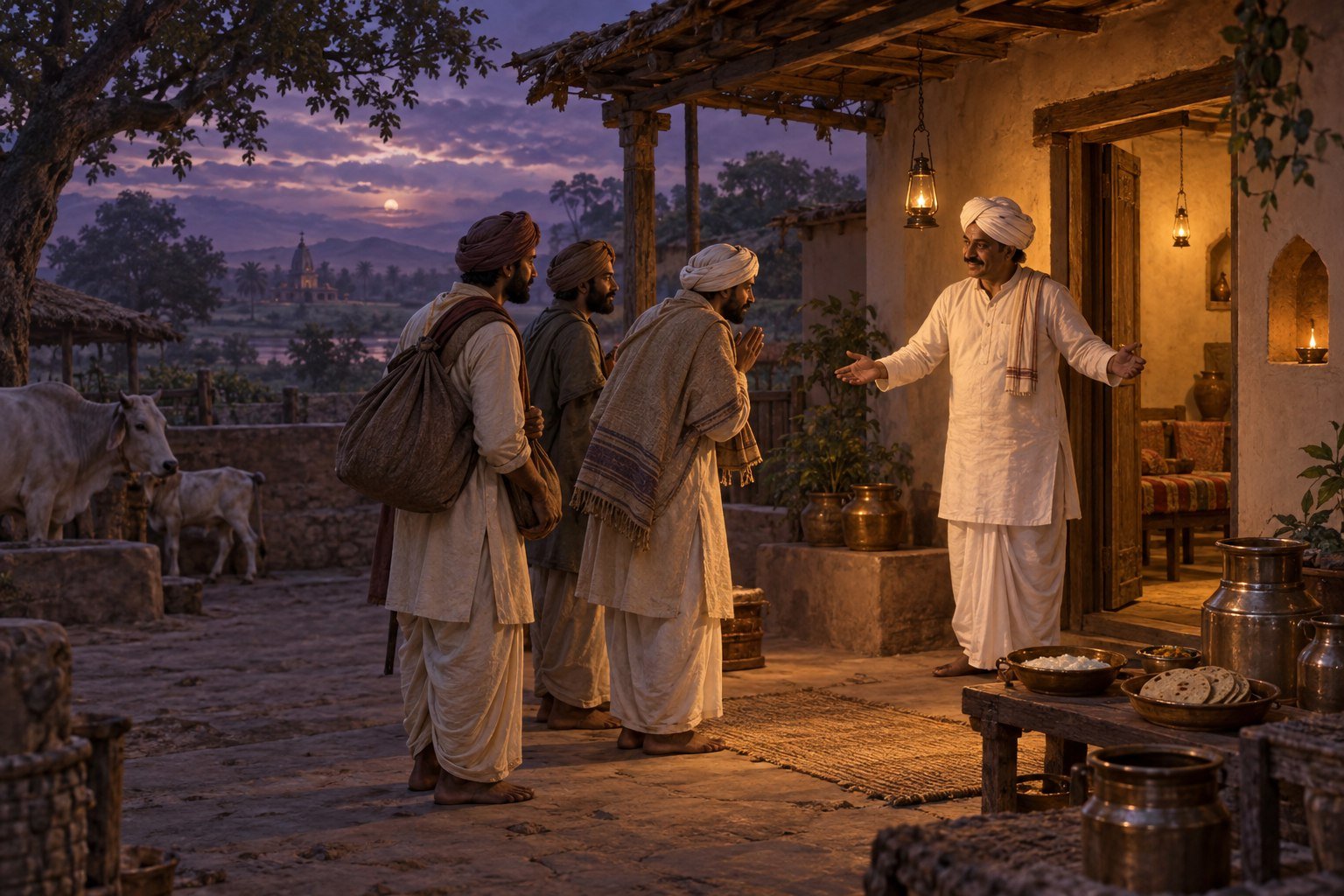
In the scenes that unfolded during the regression, his property became a place where revolutionaries could take shelter while staying out of sight of the authorities. He contributed money for their needs, including supplies and weapons. Through his dairies, he provided milk, curd, ghee and butter without charge. He had built that business to support his family; now it also helped sustain people who were risking their lives for the country.
As the account moved through the years following the massacre, the client described connections with people associated with the Ghadar Party and, later, the Hindustan Socialist Republican Association, or HSRA. He also experienced scenes involving Bhagat Singh and Chandra Shekhar Azad. These encounters were part of what emerged in the regression.
One scene stayed with particular warmth. The landowner saw himself embracing Bhagat Singh and welcoming him and his companions. He let them know they could stay on his land whenever they needed shelter. After the helplessness he had felt when his daughters never came home, he was offering what he could to protect someone else’s children as they fought for a free India.
Other scenes showed revolutionaries finding refuge on his property and receiving support from his land and dairies. His contribution did not bring him public recognition. That was how he had chosen to serve: quietly, while continuing to meet the responsibilities of the life he still had at home.
For the client, now a government officer himself, this life held another meaning. In the account he experienced, a man with wealth and influence had chosen to use them in service of his country. In his present life, he held a different kind of responsibility toward others. The resemblance gave him something to reflect on: what matters is not only the position a person reaches, but what he chooses to do with it.

What the Two Lives Helped Him Understand
The first life brought him back to the fear he had carried since childhood. The girl had not wanted to shoot the landowner. But her father’s debt gave the moneylender power over their family, and he used that power to make her harm an innocent man. Even after he declared the account settled, she spent her life watching the man suffer. For the client, that was the frightening part of owing someone: an unpaid debt could leave a person vulnerable to a demand they could not bear to fulfil.
He could see why this fear had grown stronger after he became a government officer. His decisions now affected other people. He did not want a personal favour or obligation to become a reason for compromising his judgment. What had long felt like an unexplained dread also spoke to something he valued deeply: the freedom to act with integrity.
The resemblance between the landowner’s loss of sight and his own experience in the eighth grade stayed with him, too. In the regression, the injured man lost vision first in one eye and then the other, just as the client had after an infection. He found meaning in that resemblance, while his life since childhood showed how much more there was to him than the loss of his physical sight.
The second life raised a different question. After losing his daughters and relatives at Jallianwala Bagh, the man he experienced could not undo what had happened. He chose to use his land, dairies and wealth to shelter and sustain those working for India’s independence. For the client, who had built a life of public service in the present, this was a powerful connection. He wondered whether that earlier service had some spiritual relationship to the abilities, opportunities and inner strength he had been given in this life.
He had arrived seeking the reason behind one fear. He left the session with a deeper understanding of two choices: how to remain free from obligations that might compromise him, and how to use what he had for the good of others. His physical sight was gone, but through education, service, yoga and meditation, he had continued to develop the inner vision he called his teesra netra. The past-life accounts did not make those present-day choices for him. They helped him see why those choices mattered so much.
Learning Meditation: Strength Beyond Circumstances
The client came to the session with a fear he wanted to understand. He also brought something he had cultivated for years: a steady spiritual practice. After losing his physical sight, he continued to explore yoga and meditation, developing what he described as his inner vision, or teesra netra. His story does not suggest that meditation removed every difficulty from his life. It shows how spiritual practice helped him meet life with strength, purpose and openness to deeper understanding.
We may not be able to choose every circumstance we face. We can, however, give ourselves time to understand our thoughts, care for our inner state and find a steadier way forward. Meditation is a practice that can support this work, one day at a time.
For anyone who would like to begin, our team offers a guided meditation course completely free of cost. You can request to join our free meditation learning group and learn how to bring greater awareness and spiritual stability into everyday life.
An Important Note for Readers
As a Psychologist and Past Life Regression Expert, I believe it is important to distinguish between the meaning a person finds in a regression experience and a conclusion that can be established about their present life.
In this case, the client saw a resemblance between the loss of sight described in one past-life account and what he had experienced in childhood. That resemblance was meaningful to him. It should not be read as proof that a past-life action caused his blindness, or as a suggestion that disability is a punishment. His medical history deserves to be understood and cared for on its own terms.
The second account offered him a way to reflect on service, spiritual growth and the life he had built. It does not mean that his abilities or achievements can be assigned to one past deed. His effort, education and choices in this life matter too.
Past Life Regression experiences are subjective. The people and events perceived during a session, including any recognition of a person known in the present, should not be treated as independently verified facts. Nor should a regression replace appropriate medical or psychological care.
For this client, the session brought clarity to a fear he had carried since childhood. The value of that understanding lies in what it allows him to do now: live with greater awareness, make conscious choices and respond to that old fear with a clearer understanding of where it may come from.
Past Life Regression Expert
& Psychologist
Helping people explore recurring emotional, relationship & life patterns through Past Life Regression, healing and spiritual guidance.
Reflect, Understand & Take It Forward
Tap each question to reveal a deeper perspective from this story and its wider life lessons.
Why did the client seek Past Life Regression when he had already achieved so much?
He had built a career, travelled widely and developed a strong spiritual practice. Yet even a small debt or unreturned favour filled him with fear. He came to the session to understand why owing someone anything felt so threatening, despite all the confidence he had gained in other parts of his life.
Why did the young girl shoot a man she did not hate?
Her father owed money to a moneylender who was also in a dispute with the landowner. The moneylender promised to clear her family’s debt if she shot him. She felt trapped by her father’s suffering and tried to fire from a distance in the hope that the man would survive. She did not want to harm him, but she did.
Why did she spend the rest of her life caring for the injured landowner?
When she visited him, she saw the suffering her shot had caused. She could not bring herself to confess, and she could not restore his sight. Caring for him became the way she tried to take responsibility for her action. Her care mattered, but it could not undo the harm.
What resemblance did the client notice between the landowner’s loss of sight and his own?
In the regression account, an injury near the landowner’s eye was followed by infection and the loss of sight in both eyes. The client recalled that an infection had affected one of his eyes in the eighth grade before the problem spread to the other. He found the resemblance meaningful. It does not establish the medical cause of his blindness.
Why did his fear of owing favours grow stronger after he became a government officer?
He felt that a decision or signature in his position could affect many people. If he owed someone a favour, he worried that they might one day ask him to use his authority on their behalf. He wanted to remain free to make decisions according to his judgment and integrity.
How did the loss of his family lead the landowner in the second account to support India’s freedom struggle?
In the life he experienced, the landowner’s two daughters and several relatives died at Jallianwala Bagh. He still had a household and people who depended on him, so he chose to contribute through the resources he had. His land offered shelter, his income helped meet needs, and his dairies supplied food to revolutionaries.
What did the client experience about Bhagat Singh and other revolutionaries?
He described scenes of revolutionaries finding refuge on the landowner’s property. In one scene, he saw the landowner embrace Bhagat Singh and welcome him and his companions to stay whenever they needed shelter. He also experienced connections with people associated with the Ghadar Party and the HSRA. These were experiences reported during the regression, not independently verified meetings.
Does caring for someone later erase the harm caused by an earlier choice?
No. The girl’s lifelong care did not give the landowner his sight back. Her story shows why taking responsibility matters, while also showing that some consequences cannot be undone. The deeper lesson for the client lay in what had placed her in that situation: her family’s debt had given another person power over her choices.
Should disability be understood as punishment for a past-life action?
No. The client found a personal resemblance between two accounts of eyesight loss, but that does not prove that a past-life action caused his blindness. Disability is not a measure of someone’s worth or evidence that they deserve suffering. His medical history and his achievements in this life must be understood on their own terms.
What role did meditation and inner vision play in the client’s life?
After losing his sight, he turned to yoga and meditation and cultivated what he called his teesra netra, or third eye. He described it as a source of inner awareness and confidence. Spiritual practice did not remove every difficulty, including his fear of debt. It helped him continue learning, serving others and making conscious choices in the life he was living.
Continue Your Journey
Need Personal Guidance?
Explore one-to-one Past Life Regression, healing and consultation sessions with the Vighnahartaa team.
Want to Learn Meditation?
Learn meditation free of cost and receive spiritual guidance to develop greater peace, inner strength and a deeper connection with God.
Past Life Regression Expert & Psychologist
We help people explore recurring emotional, relationship and life patterns through Past Life Regression, healing and spiritual guidance.
You May Also Like
Watch the Original Past Life Story
Prefer watching the story? Watch the original Past Life Regression case narration on YouTube.