
REAL PAST LIFE STORY
He Sold the Family Land for His Brother: A Past Life Regression Story of Trust and Unpaid Debts
By Hitesh Chhabra • Past Life Regression Expert & Psychologist
13 min read • October 2026
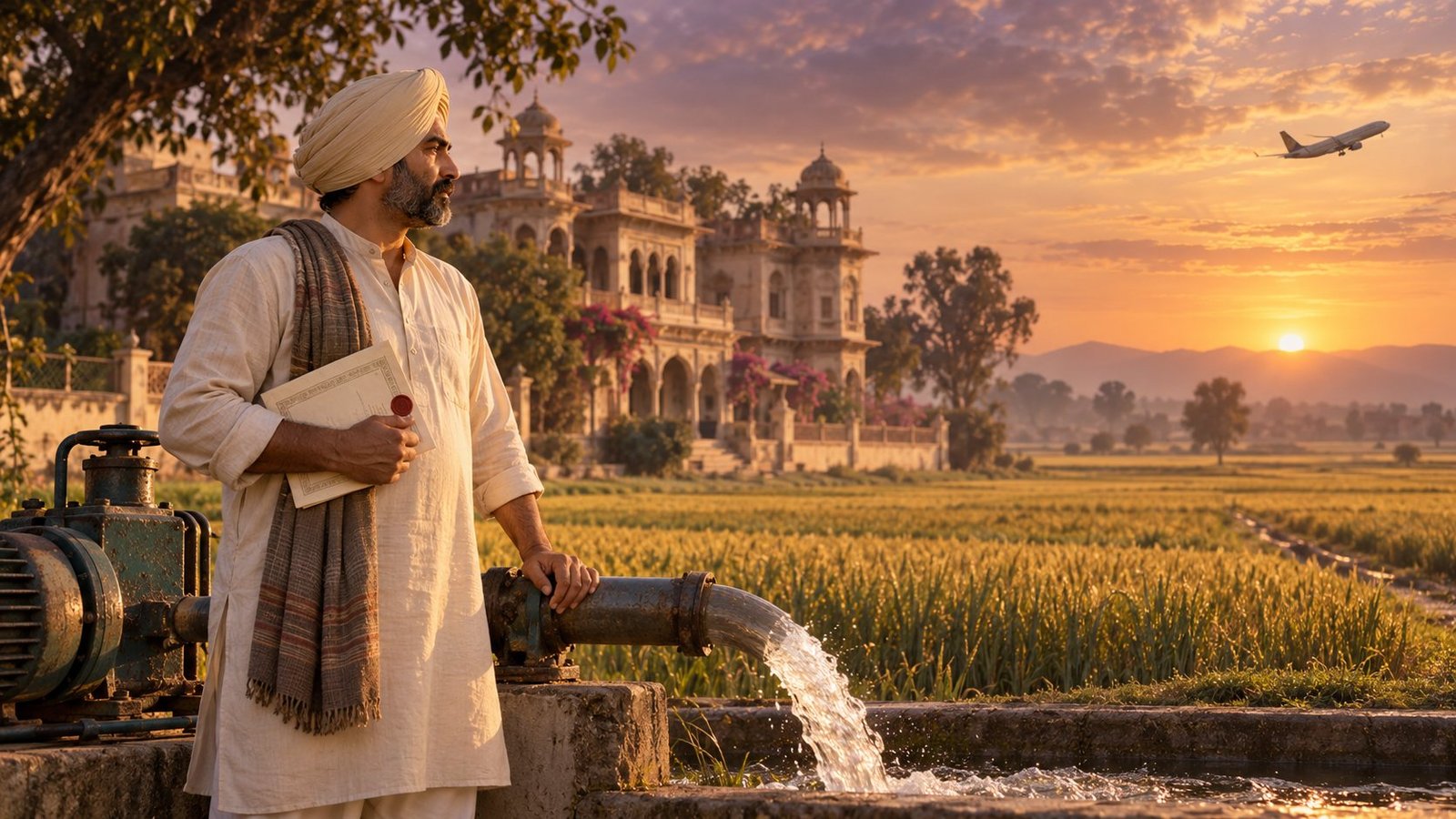
When the Land Is Gone but the Responsibility Remains
Imagine standing at the edge of a field that once belonged to your family. That land was more than something written on a document. Season after season, it helped put food on the table. It held the assurance that, whatever happened outside the village, there was something solid beneath your feet.
Now most of it has been sold. The sale was meant to open a better future for everyone. Yet the future has not arrived, and the responsibilities you hoped to share are still resting on your shoulders.
This past life regression story begins with a farmer from Punjab who came to us with that burden. About ten years before the consultation described in the video, his family had sold land to send his younger brother to England. He wanted to understand why a decision made with such hope had left him feeling betrayed, and why even the people who employed his services often failed to pay him.
A Fifteen-Year-Old Who Became the Family’s Support
His father died when he was only fifteen. His younger brother was roughly two years younger, so the age difference was small. The difference in responsibility, however, became very large.
He told us that he continued his brother’s education while taking charge of farming and the family’s livelihood himself. Over time, he worked, earned respect in the community and helped both of them establish married lives. He had a son and a younger daughter. His brother had a daughter.
Think about what happens when someone becomes responsible so early. Helping the family can gradually become the way he understands his own place in it. He may stop asking whether the burden is shared because, for so long, being dependable has meant carrying it himself.
The Promise of England
After marriage, the younger brother increasingly wanted to go abroad. Other people from their village and extended family had settled overseas and were sending money home. Their families were building houses, buying land and becoming visibly more prosperous.
His proposal sounded hopeful: sell a portion of the family land, send him to England, and he would earn enough to support everyone. In time, perhaps they could even buy the land back. In their thinking, earning in pounds would make a relatively small remittance valuable at home.
This was not simply one man’s travel plan. It was a family placing its security behind a promise. The elder brother was not imagining himself as a donor who would never need anything in return. He was imagining a shared future in which each brother would carry his part.
A Small Sale Turned into a Much Larger Loss
The farmer said the initial estimate given through the travel agent was around ₹10 to ₹12 lakh. A portion of land was sold to raise that amount. At that stage, the family believed enough would remain to keep their livelihood going.
But once the process had started, the expenses increased. They feared that, unless they provided more money quickly, the amount already paid would be lost. Under that pressure, more land was sold in a hurry. He described receiving only around ₹17 to ₹18 lakh for land that might otherwise have brought ₹25 to ₹30 lakh.
The narration puts the eventual expenditure at approximately ₹30 lakh and the loss of their family land at around seventy to eighty per cent. These were approximate amounts in his account, not an audited statement. What mattered emotionally was clear: the safety beneath the family’s feet had been reduced far more than they had intended.
Learning a New Skill to Keep Two Households Going
His brother reached England, but suitable work did not come immediately. Meanwhile, the land left in Punjab could no longer adequately support the household.
The elder brother went to the city and learned to install, maintain and repair the water pumps used for irrigating fields. He began offering those services to other farmers in his village. There was work available. Pumps broke down, motors needed repairs, and crops could not wait for convenient timing.
This was an important detail. He had not simply sat waiting for money from abroad. Faced with a difficult situation, he tried to adapt. Yet the new skill that was supposed to help him stand again brought another painful problem.
The Pump Worked, but the Payment Never Came
I asked him why repair work was causing losses. On the surface, it seemed straightforward: do the work, account for the materials and charge for the service. He explained that farming often runs on credit. A farmer may receive money only after a crop is harvested and sold, while an irrigation pump needs attention immediately.
So he repaired the pumps and kept accounts, expecting payment later. According to him, some customers then claimed to have paid amounts he had not received. Some disputed the work listed on his slips. Others repeatedly postponed payment, leaving accounts unsettled for years.
Picture the difference between those two sides of the transaction. Water is flowing again in the customer’s field. The crop has received what it needs. But the man whose labour restored that flow is still waiting for the money his own children need. His complaint was not that people were occasionally late. It was that his work seemed repeatedly to lose its value when the time came to pay.
The Suspicion That Hurt More Than the Shortage
The younger brother said he was not earning enough in England to provide substantial help. He did sometimes send small amounts. But the elder brother said that, over roughly ten years, he remained responsible for his own wife and children as well as his brother’s wife and daughter living with them in Punjab.
Then another suspicion began to grow. Acquaintances and relatives reportedly saw his sister-in-law visiting Western Union outlets. He came to believe that his brother was sending money privately to his wife, while the shared household expenses continued to fall on him.
I asked whether the strain he was under might be influencing his interpretation. Perhaps his brother really was struggling. He explained what others had told him and why he found it difficult to dismiss. Those observations were the basis of his belief; they did not independently establish the amounts sent or how any money was used. His deepest worry was that, while another family might be saving, he could not build a future for his own children.
A Spacious Haveli and Golden Punjabi Jutti
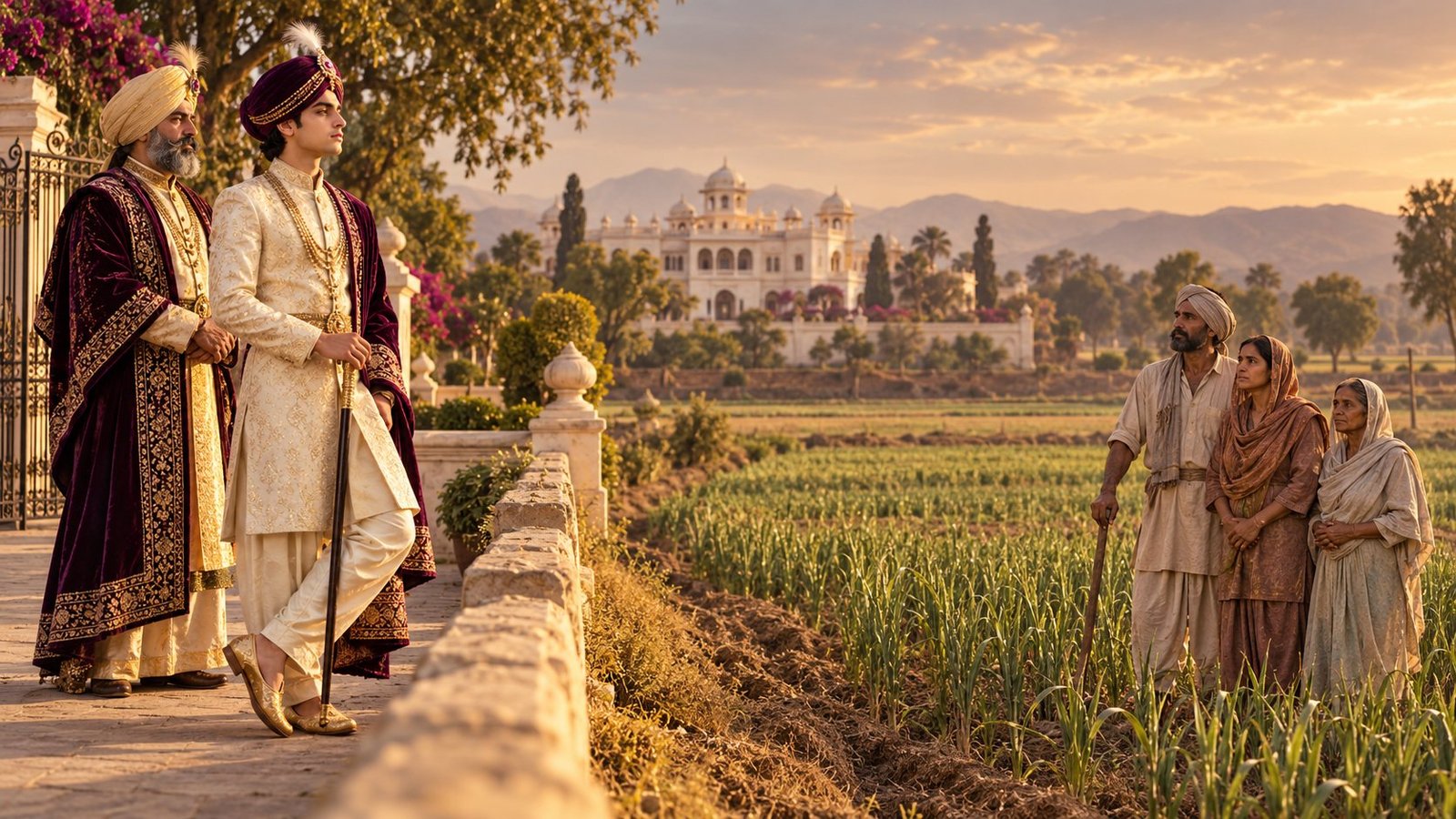
In the regression, the setting changed. He experienced himself as a young man of about seventeen, standing inside a very large haveli. White walls stretched far away on both sides. Looking down, he described golden Punjabi jutti and fine clothing.
He recognized three people nearby as his parents and grandmother in that life. He felt close to them and understood himself to be their only son. The name that emerged was Dilip Singh. He experienced himself as a college student.
When he explored the books associated with that scene, he placed the period somewhere around 1920 to 1922. These details belonged to his regression experience. We were following the scenes and recognitions he described, rather than establishing a historical identity from external records.
Two Hundred and Fifty Acres, Yet Another Small Field
The next significant scene involved his father arguing with a family of eight on a piece of land. I asked whether the dispute concerned irrigation water, a familiar source of disagreement between neighbouring fields. He said it did not.
He felt that the land belonged to the poorer family and that he and his father had brought their men there to take possession. The plot was not especially large. In his experience, their own estate already covered roughly 250 acres, but they habitually absorbed smaller holdings around it.
This is where the story’s question becomes uncomfortable. How much land is enough when the desire is not for security but for expansion? A small field may look insignificant from a large estate. For the family depending on it, that same field can contain almost their entire future.
The Question They Had Not Asked
I asked what would happen to the poorer family after losing its land. Did they have another occupation? Another way to support themselves? His response within the regression was that he and his father did not concern themselves with that.
If they began worrying about everyone else, he felt, they would not be able to keep increasing their holdings. The family’s inability to resist made the takeover possible. Their need did not become a reason to stop.
Notice the change in perspective. In the present, he was painfully aware of what losing farmland meant for children, food and security. In the scene he experienced, those same concerns had been absent from his own calculations. What was now a wound had once been treated as somebody else’s problem.
The Familiar Faces in the Earlier Family
Several recognitions emerged during the session. He identified the father who stood beside him in the land-taking scene as his daughter in the present life. He recognized his mother from that earlier household as his present father, and his grandmother as his present uncle.
Among the eight members of the family whose land had been taken, he recognized two as his present younger brother and sister-in-law.
In the narration, I reflected on the apparent reversal. The people whose livelihood had once been disregarded now appeared, within his experience, connected with the loss of his own family’s land. His concern for his daughter’s future acquired another layer because she was the person he recognized as his former partner in that acquisition. These were karmic interpretations explored in the session, not grounds for blaming his daughter or treating relatives as proven enemies from another lifetime.
The Unpaid Accounts Led Back to the Haveli

We also explored the people who had used his pump-repair services without properly paying him. He recognized them in the earlier life as people employed around the haveli and fields. One appeared as a watchman; others worked in the care of the land.
He described a habit of cutting their wages over small matters. If a worker objected too strongly, he could be dismissed. In that case, the wages still owed were not paid at all.
Again, the emotional pattern was familiar. Work had been done, but the person with greater power decided how much of it would be acknowledged. In the present, he waited with repair slips. In the regression, others had waited for their wages. The form of the account had changed, but the experience of having one’s labour discounted seemed to echo.
What the Regression Meant to Him
By the end of the account, the farmer felt that his central questions had found a connection. The lost land and the unpaid work no longer appeared to him as entirely separate misfortunes. He understood them through the relationship patterns that had emerged in the session.
The video does not report that his brother later returned money, that disputed payments were recovered, or that the family’s land was restored. We should not add those outcomes merely because a story feels more complete with a happy ending.
What the narration offers is a person’s search for meaning and the recognitions he experienced. A spiritual understanding may change the questions someone asks. It does not, by itself, settle a financial account or prove another person’s motives.
Before We Count the Money, Can We See the Person?
There is a reflection here for all of us, whether or not we interpret the story through past lives. When we owe someone money, we can easily see only an amount. We may forget the school fee, groceries, medicine or anxious waiting that amount represents in their home.
Consider an ordinary example. Someone repairs something urgently for us, trusting that we will pay as agreed. Once our immediate problem disappears, their payment begins slipping down our list of priorities. Nothing dramatic has happened from our side. From theirs, however, the uncertainty may be growing every day.
Similarly, a family sacrifice needs honest communication. Love does not remove the need to discuss responsibility, expectations and limits. Caring for a brother and protecting one’s own children are not competing moral duties that require one side to disappear.
For me, the lasting question in this past life regression story is simple: when our plans succeed, who carries the cost? And when someone has trusted us, do we remember that trust after their usefulness to us is over?
A Note About This Account
This article is based on the original Vighnahartaa narration. Present-life events reflect the farmer’s account. The earlier-life scenes and recognitions are subjective regression experiences, and the karmic connections are spiritual interpretations rather than independently verified history.
The illustrations are symbolic and do not depict the actual client. Exploring a karmic pattern does not make exploitation acceptable or remove anyone’s responsibility to honour commitments in the present.
For another reflection on money and relationships, read Used Like an ATM: a mother’s past life regression story.

Past Life Regression Expert
& Psychologist
Helping people explore recurring emotional, relationship & life patterns through Past Life Regression, healing and spiritual guidance.
Reflect, Understand & Take It Forward
Tap each question to reveal a deeper perspective from this story and its wider life lessons.
Why did the farmer seek past life regression?
He wanted to understand the painful pattern involving family land sold for his brother’s journey abroad and customers who did not properly pay for his pump-repair work.
How much land did the family reportedly lose?
He described selling roughly seventy to eighty per cent of their family land as the expenses of sending his brother abroad increased. The amounts in the narration are approximate.
Was the brother’s private remittance independently established?
No. The farmer’s belief was based on reports that his sister-in-law had visited Western Union outlets. The narration does not provide verified amounts or records of how money was used.
Who was Dilip Singh in the regression?
He experienced himself as a young man of about seventeen, a college student from a wealthy household, during a period he placed around 1920 to 1922.
Who did he recognize in the dispossessed family?
He recognized his present younger brother and sister-in-law among the eight members of the poorer family whose land was taken in the regression scene.
Who did he recognize as his earlier father?
He recognized that figure as his present daughter. This was a subjective recognition, not a reason to blame or burden the child.
How did the unpaid repair bills connect with the earlier scenes?
He recognized the present customers as former workers whose wages he and his household had cut or withheld. The session explored the emotional similarity between those situations.
Did the video report that his money or land was recovered?
No follow-up recovery, reconciliation or restoration of property is reported in the source narration.
Does karmic reflection mean accepting unfair treatment?
No. Reflection can coexist with clear boundaries, honest conversations and appropriate practical steps concerning present responsibilities.
What everyday lesson can a reader take from the story?
Treat another person’s livelihood, labour and trust as seriously as your own. An unpaid amount can represent much more to the person waiting than it does to the person delaying.
Continue Your Journey
Need Personal Guidance?
Explore one-to-one Past Life Regression, healing and consultation sessions with the Vighnahartaa team.
Want to Learn Meditation?
Learn meditation free of cost and receive spiritual guidance to develop greater peace, inner strength and a deeper connection with God.

Past Life Regression Expert & Psychologist
We help people explore recurring emotional, relationship and life patterns through Past Life Regression, healing and spiritual guidance.
You May Also Like

Watch the Original Past Life Story
Prefer watching the story? Watch the original Past Life Regression case narration on YouTube.