
REAL PAST LIFE STORY
He Promised to Return: A Past Life Regression Story of Marriage and Waiting
By Hitesh Chhabra • Past Life Regression Expert & Psychologist
13 min read • October 2026
A Life That Looked Settled, Except for One Question
Imagine being trusted with other people’s financial futures while feeling unable to understand what is happening in your own personal life. You can study an investment, consider its risks and make a responsible decision. But when a relationship begins with warmth and then disappears into silence, there is no balance sheet that can explain the hurt.
The woman in this past life regression story had built a successful life. A commerce postgraduate, she ran her own financial and investment business and managed substantial sums for clients. What stayed with me was the simplicity of her manner. Success had not made her arrogant. She came across as grounded and sincere.
Yet marriage had remained a painful question for about eight years. Conversations with prospective partners would begin, continue for a few weeks or perhaps a month or two, and then stop. Each time, she was left wondering why. Eventually the question moved inward: was there something wrong with her?
That is where our conversation began. Before exploring any earlier life, we needed to understand the life she was living now.
When Rejection Starts Sounding Like a Verdict
A disappointing match can hurt once. Repeated disappointment can slowly begin to sound like a judgment on the person herself. A conversation ends, and the mind does more than register that ending. It starts collecting it alongside every earlier rejection.
In the narration, I spoke about people meeting at different “frequencies”. I used that image to discuss compatibility: two people may not be ready for the same kind of relationship, even when each wants marriage. A mismatch does not establish that one person has no value.
Think of two people who both say they want companionship. One may mean shared responsibility, honesty and a life built together. The other may want company while keeping every important decision entirely his own. The word is the same, but the expectations beneath it are different. This is an everyday illustration of the distinction, not another event in her case.
I did not want her to enter a relationship simply to escape the fear of remaining unmarried. But as she spoke, it became clear that the repeated proposals were only the outer part of the story. There was an earlier marriage behind them.
A Meeting, a Roka, and a Future That Seemed Close
She was about twenty-three when she met an Indian-origin man who lived in America. They connected through a matrimonial website while he was visiting India for work. Their conversations progressed quickly. Within roughly a week, the families had held a roka, the formal understanding that the relationship would move toward marriage.
He then returned to America. About three or four months later, he came back to India with his family, and the couple completed a court marriage.
For her, this was no longer a possibility being discussed over a matrimonial profile. It was a marriage. Families had participated. A legal commitment had been made. There was every reason, from her side, to imagine that a shared life would follow.
Sometimes the greatest weight in a promise comes from what it allows another person to begin imagining. The house may not yet be ready. The journey may still be ahead. But inwardly, a person has already started making room for that future.
The Husband Who Went Back Alone
After the court marriage, he said urgent work required him to return to America. She remained in India, expecting him to come back and take her with him.
At first, their calls were affectionate. Then the tone changed. Warmth gave way to bitterness. Eventually he told her that he would not return, and communication stopped.
Initially, she hoped he was speaking in anger. Perhaps there had been a misunderstanding. Perhaps, once he calmed down, they would speak again. But the silence continued, and the future she had been waiting to begin remained suspended.
There is a particular pain in this kind of absence. The person is not beside you, yet the expectation of that person occupies your days. Your life keeps moving through ordinary tasks, while one part of you remains at the same unanswered doorway.
A Marriage She Never Got to Live
She waited for months before accepting that he was not coming back. Eventually she sought a divorce. According to her account, the court’s summons received no response, and the divorce was granted about a year and a half later.
What troubled her was the difference between the label she now carried and the life she had actually lived. She had not spent even one day in a marital home with him. The ordinary beginning of marriage, living together and learning each other’s habits, had never happened.
In the video, I compared her situation with that of someone who lives with a husband for a few months before the relationship breaks down. That too can be deeply painful. Here, however, she had acquired the social identity of a divorced woman without ever having entered the shared household she had expected.
When later proposals withdrew, that earlier wound was touched again. The eight years in the narration refer to this wider struggle around marriage. They do not mean that she waited eight years for the same husband before seeking divorce.
Past Life Regression: Bare Feet in a Busy Market
During the past life regression, she described a very different setting. She experienced herself as a poor man, approximately thirty-five to forty years old, walking barefoot through a market. His clothes were worn: a kurta-like shirt and pajama. A large palace stood beyond the market.
He was looking for work. He approached one shop after another, hoping someone would give him a task. Nothing came of it. The day passed, and by evening he still had no employment.
The contrast with her present life was striking. Today she could manage a successful business. In this scene, he could not find even the day’s work he needed. But the emotional centre of the scene was still ahead. It appeared when I asked him to go home.
He did not want to return.
The Hope in His Wife’s Eyes

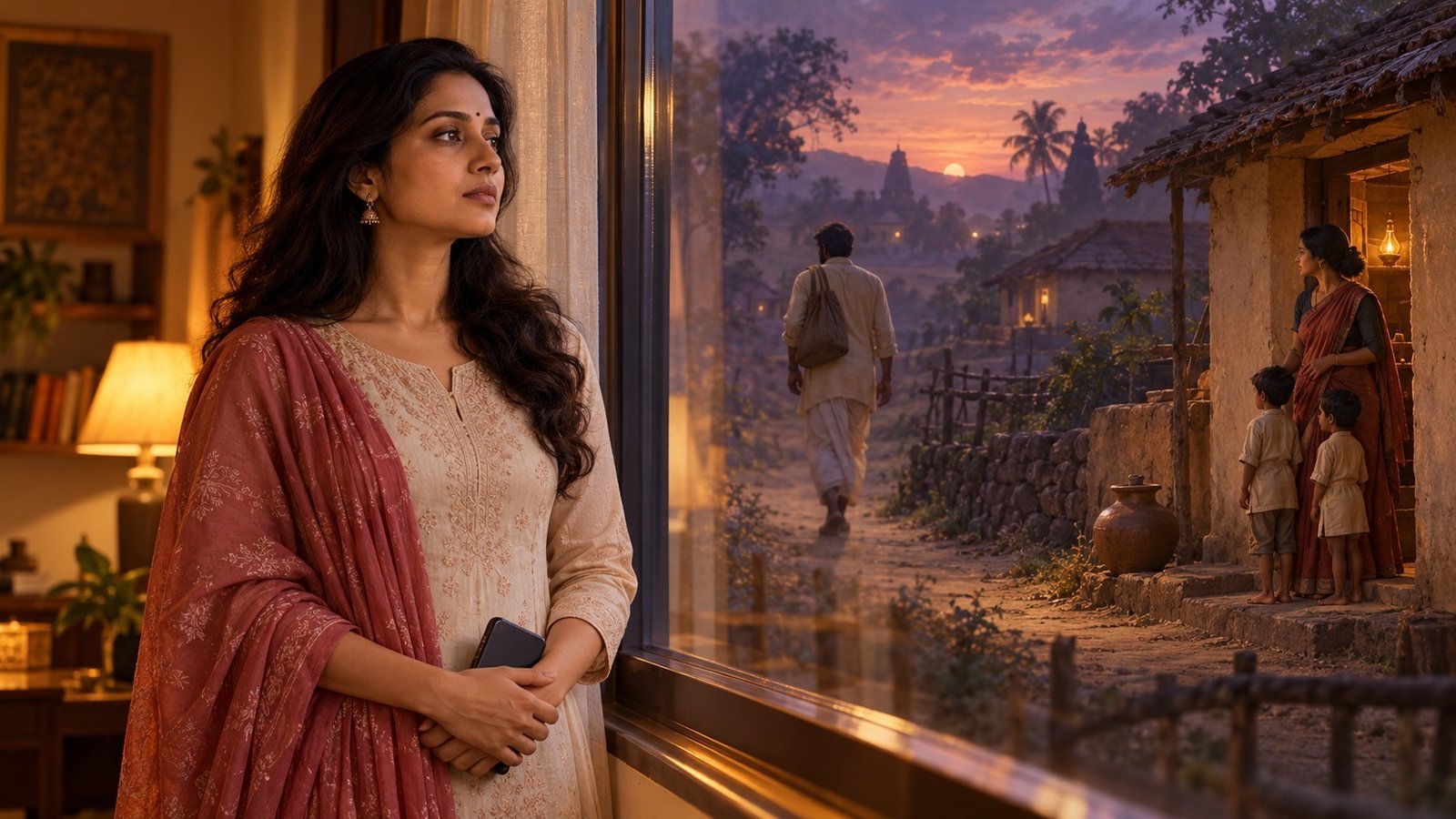
Eventually he reached a small hut. His wife was preparing food, and two little boys, about three and six years old, were playing nearby. She looked toward him with the hope that he might have found work.
Nothing grand was being asked of him in that moment. The home was modest. The family was small. Yet to him, their needs felt like a burden from which he wanted to escape.
He explained that he had not wanted to marry. He had known how difficult it would be to support a household, but family pressure in his village had led him into marriage. Later he had moved to the capital in search of better opportunities. The move had not brought the work he expected.
We can understand the pressure of poverty without overlooking the people who shared it. His wife and children were living inside the same difficulty. Yet in his mind, they had become part of what he wanted to leave behind.
He Said He Would Come Back for Them
I asked what would happen to his wife and children if he left. In the scene, his response showed how little he was considering their future. He wanted to get away. What they would eat, where they would turn, or how they would manage was not occupying his mind in the same way.
He told his wife that he would go outside the city, find work and establish himself. After that, he would return and take the family with him.
Then he left.
He survived through whatever small jobs he could find. But he never returned to the hut. He did not go back to see the boys. He did not find out how his wife was managing. The promise remained with the people he had left, while he continued his life elsewhere.
This was the point at which the story’s two doorways seemed to face each other: the woman in the present waiting for a husband abroad, and the wife in the regression waiting for a man who had promised to come back.
Three Familiar Souls in the Hut
As the session continued, she recognized the wife in that scene as the man who had become her husband in the present life, the Indian-origin man living in America.
She also recognized the two boys as his present father and brother. The narration does not clearly assign one particular boy’s age to one particular present relative, so that detail should remain open.
These recognitions belonged to her inner experience during the session. They were not independently established identities. For her, however, they brought the emotional pattern into focus. In one account she waited; in the other, she had been the person who walked away.
The point of exploring such a pattern is not to turn today’s relatives into defendants in a story from another life. It is to notice what the experience brings forward about responsibility, dependence and the effect of our choices on others.
He Grew Old Without Looking Back
The man’s life moved onward. In the account, he lived alone and died naturally at around seventy, in another humble dwelling. There was no return to the family at the end of the story. No scene showed him discovering what had happened to his wife or children.
That absence matters. Sometimes we expect the person who leaves to encounter a dramatic consequence immediately. Here the narration showed something quieter: he continued living while the life he had left behind remained unexamined.
A person can stop asking about someone and still leave a deep effect on that person’s life. Not knowing the outcome does not make the original decision weightless. In this session, the unanswered question about the family became part of the understanding she was seeking.
The Guidance Returned to the Promise
Within the spiritual part of the session, she sought guidance about the connection between the two experiences. The guide she perceived drew her attention to the hardship and loneliness of the wife who had been left behind.
The narration describes the wife’s pain in the language of a curse and a karmic bond. This is the spiritual interpretation that arose within the regression, not an independently verified explanation for the client’s present circumstances.
The guidance placed particular emphasis on the false hope. Leaving the family was already a serious act. But the assurance that he would return kept his wife attached to an expected future. She was left trying to live around a promise he had no intention of fulfilling.
The distinction is not that an honest abandonment would have been harmless. It is that the false reassurance added another layer of injury. Along with support and companionship, it took away the clarity on which she might have based her next decisions.
Forgiveness Without an Invented Happy Ending
The guidance was to forgive the hurt she had experienced in the present and to seek forgiveness for the hurt she recognized in the earlier story. During the session, she engaged in an inner dialogue with the people she had perceived, expressed remorse and asked for forgiveness.
She described a sense that they were satisfied and that the bond could be released. That was the resolution reported within the experience.
The video does not say that she later remarried, that the former husband returned, or that every difficulty disappeared. We should not place a wedding at the end simply because it would make the story easier to close.
The shift described is an inward one: the waiting acquired a meaning for her, and the session moved toward apology and forgiveness. Whatever a reader believes about past lives, the responsibility to speak honestly in present relationships remains real.
When “Soon” Becomes Someone Else’s Waiting Room
Consider an ordinary situation. Someone already knows that he does not wish to continue a relationship, but he keeps saying that things will improve soon. He may tell himself that he is avoiding an uncomfortable conversation. The other person, however, may be postponing decisions, refusing other possibilities and arranging life around that reassurance.
For one person, the word takes a moment to say. For the other, it can hold months of expectation.
This is an illustration of the story’s central reflection, not an additional event from the client’s life. We may recognize the same responsibility in family commitments, work promises and assurances of support. If circumstances change, can we communicate that change honestly? If we cannot promise something, can we resist saying it only because the moment feels easier that way?
A promise is not just a sentence that leaves our mouth. It becomes part of another person’s plan for living. That is why the words “I will come back” deserve more care than the relief we feel after saying them.
The Question This Story Leaves With Us
For me, the lasting question in this past life regression story is not how long someone should wait. It is what we ask another person to carry while we make our choices.
Are we offering hope with a sincere intention to act? Or are we using hope to avoid taking responsibility for an answer we already know?
The woman came with the pain of being left behind. The regression placed her, in her own experience, on the other side of a similar promise. Its reflection reaches beyond either role. We can acknowledge the hurt we have suffered and still examine the care we owe to others.
Honesty may be difficult in the moment. False hope can make that difficulty last inside someone else for much longer.
A Note About This Account
This article follows Hitesh Chhabra’s original Vighnahartaa narration. The present-life events are the client’s reported account. The earlier-life scenes, recognitions and spiritual guidance describe subjective regression experiences, not independently verified history.
The illustrations are symbolic and do not depict the actual client. A karmic interpretation does not justify abandonment or mean that someone deserves present-day mistreatment. No later marriage or other follow-up outcome is claimed here.

Past Life Regression Expert
& Psychologist
Helping people explore recurring emotional, relationship & life patterns through Past Life Regression, healing and spiritual guidance.
Reflect, Understand & Take It Forward
Tap each question to reveal a deeper perspective from this story and its wider life lessons.
Why did she seek past life regression?
She wanted to understand the repeated disappointments around marriage and the husband who returned to America after their court marriage but never came back for her.
Did she wait eight years for the same husband?
No. The eight years refer to the wider period of marriage-related difficulty. The narration describes divorce being granted about a year and a half after the earlier marriage, not after eight years of waiting.
Had she lived with him in a marital home?
According to her account, she had not spent even one day living with him in a marital home.
What did she experience in the earlier life?
She experienced herself as a poor man who could not find work, felt burdened by his family and left after promising to return for his wife and two sons.
Who did she recognize as the wife?
She recognized the wife as her present husband. She recognized the boys as his present father and brother. These were subjective recognitions within the session.
Why was the promise so important?
The guidance focused on the false hope created by an assurance to return. The wife was left waiting for a future the man did not intend to provide.
Would leaving honestly have made abandonment acceptable?
No. The reflection is that false reassurance adds to the harm of abandoning responsibility. It does not make abandonment itself harmless.
Did the narration report a later remarriage?
No. The video describes an inner process of apology, forgiveness and perceived release, without a follow-up marriage or guaranteed outcome.
Does karmic reflection mean blaming the person who was abandoned?
No. The client’s spiritual interpretation should not be used to excuse anyone’s present conduct or tell a person that mistreatment is deserved.
What can we practise in everyday relationships?
Make commitments sincerely, communicate changes honestly and remember that another person may be arranging important choices around the hope we offer.
Continue Your Journey
Need Personal Guidance?
Explore one-to-one Past Life Regression, healing and consultation sessions with the Vighnahartaa team.
Want to Learn Meditation?
Learn meditation free of cost and receive spiritual guidance to develop greater peace, inner strength and a deeper connection with God.

Past Life Regression Expert & Psychologist
We help people explore recurring emotional, relationship and life patterns through Past Life Regression, healing and spiritual guidance.
You May Also Like

Watch the Original Past Life Story
Prefer listening to the story? Watch the original past life regression narration by Hitesh Chhabra below.